The Future of Movement
Breaking Down the ACSM Top 10 Fitness Trends for 2026
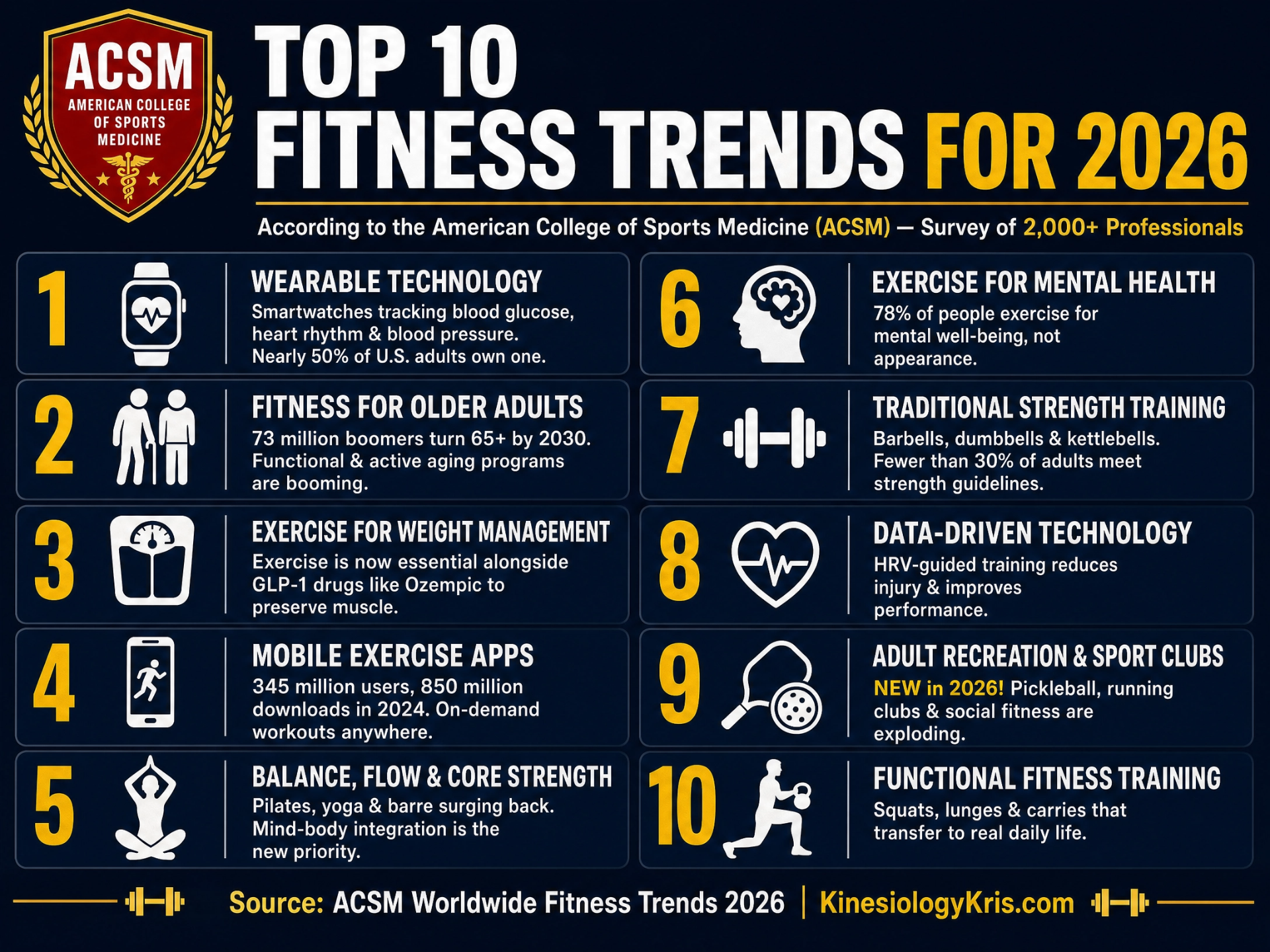
The fitness landscape is shifting dramatically. For the 20th consecutive year, the American College of Sports Medicine (ACSM) has released its highly anticipated Worldwide Fitness Trends forecast for 2026. Based on a massive survey of over 2,000 clinicians, researchers, and exercise professionals, this year's report highlights a major shift toward technology-driven personalization, active aging, and the integration of movement with mental health [1].
As kinesiologists, movement coaches, and fitness enthusiasts, understanding these trends is critical. We are no longer just counting reps; we are using data, biology, and behavioral science to prescribe movement as medicine.
1. Wearable Technology (The Undisputed King)
For yet another year, Wearable Technology claims the #1 spot. But we aren't just talking about step counters anymore. The wearables of 2026 feature advanced biosensors capable of capturing fall detection, heart rhythm, blood pressure, blood glucose, and skin temperature [1].
With nearly half of U.S. adults now owning a smartwatch or fitness tracker, the challenge for exercise professionals has shifted. As lead author Dr. Cayla R. McAvoy points out, "The question is no longer whether people will use wearables. What matters now is teaching people how to use them in ways that best support their health and behavior change" [1].
2. Fitness Programs for Older Adults (Active Aging)
The baby boomer generation is aging, and by 2030, all 73 million boomers will be over the age of 65 [1]. The industry is finally catching up to this reality. Adults 65 and older now visit gyms and studios more often than any other age group [1].
The most successful programs are pivoting away from the stigmatized term "senior fitness" and instead focusing on "functional" and "active aging" formats. These evidence-based programs prioritize resistance training to preserve strength, balance exercises to reduce fall risk, and low-impact cardio for heart health [1].
3. Exercise for Weight Management (The GLP-1 Era)
Hitting its highest position to date, Exercise for Weight Management has evolved significantly due to the explosion of obesity management medications like GLP-1 receptor agonists (e.g., Ozempic, Wegovy) [1].
While these drugs are highly effective for fat loss, they can also cause significant muscle loss if not paired with resistance training. Exercise professionals are now critical partners in medical weight management, tasked with helping patients preserve lean mass, maintain physical function, and sustain metabolic health both during and after pharmacologic treatment [1].
4. Mobile Exercise Apps
With over 345 million users generating 850 million downloads in 2024 alone, mobile exercise apps continue to dominate [1]. They offer unparalleled convenience, delivering on-demand, scheduled, or live-streamed workouts anywhere in the world. For coaches, these apps serve as powerful supplemental tools for habit-building, self-monitoring, and accountability between in-person sessions.
5. Balance, Flow, and Core Strength
After a pandemic-related dip, holistic mind-body formats like Pilates, yoga, and barre are surging back [1]. This trend bridges movement quality with mental well-being, emphasizing posture, mobility, and core control. Building a strong core and improving balance are increasingly recognized as essential prerequisites for safer, more effective strength and cardio training, particularly for aging populations [1].
The Rest of the Top 10
The second half of the list reveals a fascinating blend of mental health focus, data optimization, and a return to social connection:
| Rank | Trend | Why It Matters in 2026 |
|---|---|---|
| #6 | Exercise for Mental Health | Up two spots from last year. 78% of exercisers now cite mental/emotional well-being as their top reason for working out—ahead of physical appearance [1]. |
| #7 | Traditional Strength Training | Using barbells, dumbbells, and kettlebells remains foundational. Messaging is shifting from aesthetics to long-term bone density and metabolic health [1]. |
| #8 | Data-Driven Technology | Moving beyond basic tracking, 70% of wearable users now use biofeedback (like Heart Rate Variability) to tailor their daily intensity and recovery strategies [1]. |
| #9 | Adult Recreation & Sport Clubs | A brand new entry for 2026! Driven by the massive popularity of Pickleball and running clubs, adults are seeking social connection and fun outside traditional gyms [1]. |
| #10 | Functional Fitness Training | The "fitness is function" movement. Exercises like squats, lunges, and carries that transfer directly to real-world activities and daily life capability [1]. |
The Kinesiology Takeaway
The 2026 ACSM trends paint a clear picture: the future of fitness is highly personalized, technologically integrated, and deeply holistic. We are moving away from the "no pain, no gain" mentality of the past and embracing a model where data guides our intensity, movement protects our mental health, and functional strength preserves our independence as we age.
Whether you are a coach designing a program or an individual trying to optimize your health, the key to success in 2026 is integration. Use the wearable data, but don't forget the social connection of a run club. Lift heavy weights, but balance it with mobility and flow.
Movement is medicine. Let's prescribe it wisely.
References
- American College of Sports Medicine (ACSM). The Future of Fitness: ACSM Announces Top Trends for 2026.