Breakthroughs in Biomedicine
Shaping the Future of Health in 2026
The first half of 2026 has brought remarkable advancements in medical science, demonstrating the profound impact of innovative research on patient care and disease management. From pioneering treatments for pancreatic cancer to revolutionary smart wound-healing devices, these breakthroughs offer new hope for patients worldwide. This article highlights three of the most compelling medical discoveries of recent months.
1. A Leap Forward in Pancreatic Cancer Treatment
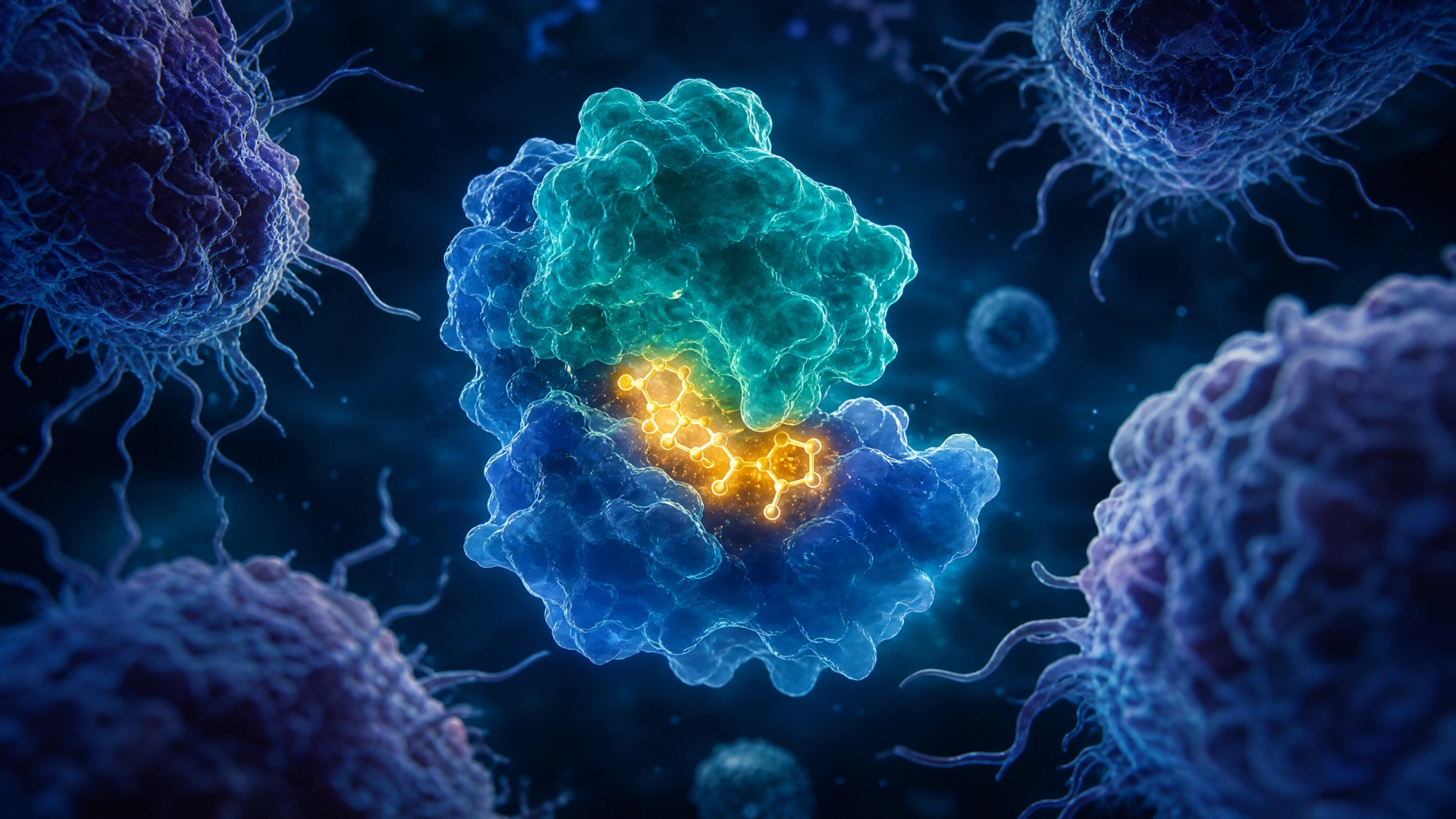
A molecular visualization depicting the RAS protein complex being locked into an inactive state by a targeted therapy, surrounded by pancreatic cancer cells.
Pancreatic cancer has long been one of the most challenging malignancies to treat, with many therapies failing to significantly improve survival rates. However, 2026 has witnessed a major turning point with the introduction of Daraxonrasib, a novel "molecular glue" therapy. [1]
Daraxonrasib targets RAS, the primary oncogenic driver in pancreatic cancer. It works by locking RAS into an inactive trimer alongside a third molecule, Cyclophilin A. This mechanism is effective against multiple RAS isoforms, inhibiting the active, GTP-bound RAS(ON) state — a more potent approach than traditional RAS(OFF) inhibition. In clinical trials, Daraxonrasib used as a second-line therapy doubled the median overall survival of patients, while also improving their quality of life and reducing cancer-associated pain. [1]
Furthermore, researchers are building upon this foundation. A combination therapy involving Daraxonrasib and Vopimetostat — which targets a synthetic lethality vulnerability in pancreatic cancers deficient in the MTAP enzyme — achieved a 90% progression-free survival rate at six months in early Phase 1/2 trials, compared to approximately 30% with the current standard-of-care chemotherapy. [1]
| Therapy | Mechanism | 6-Month PFS |
|---|---|---|
| Standard chemotherapy | Cytotoxic | ~30% |
| Daraxonrasib alone | RAS(ON) inhibition | ~50% |
| Daraxonrasib + Vopimetostat | RAS inhibition + PRMT5/MTAP synthetic lethality | ~90% |
2. AI-Guided Shape-Shifting Microneedles for Diabetic Wounds
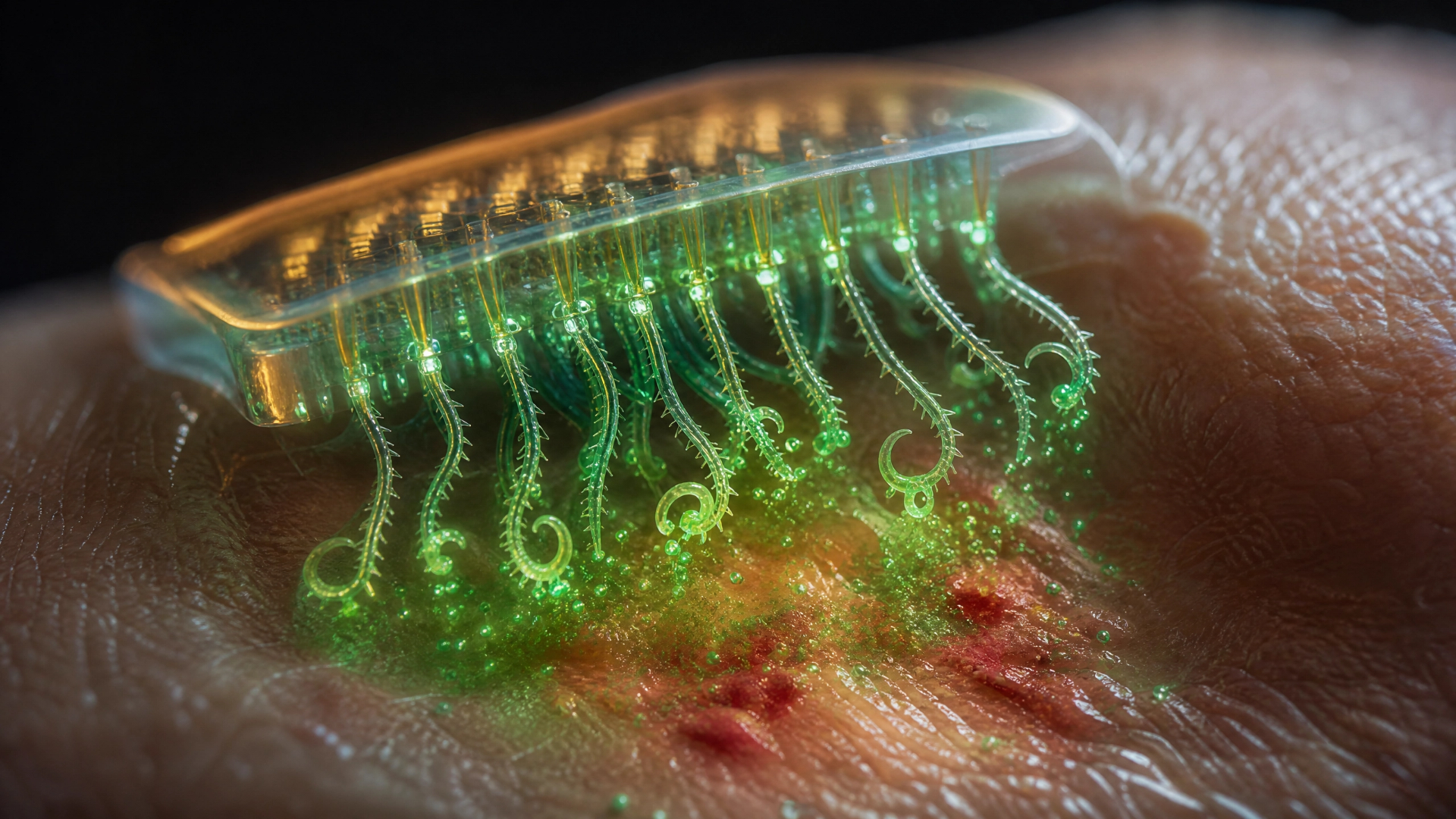
A futuristic AI-guided microneedle patch applied to a wound site, with shape-shifting needles delivering regenerative treatment directly into the tissue.
Chronic wounds are a significant complication for people with diabetes, often leading to delayed healing, persistent inflammation, and an increased risk of infection. Addressing this challenge, researchers at Hanyang University have developed an AI-guided, 4D-printed microneedle patch inspired by the carnivorous plant Drosera capensis. [2]
This innovative device features shape-shifting microneedles that bend upon contact with body temperature. This mechanical action helps physically close the wound edges, mimicking the gripping motion of the plant's tentacles. Simultaneously, the patch delivers regenerative DNA and antibacterial zinc treatments directly to the site. Preclinical experiments have demonstrated that this technology not only accelerates the healing process but also promotes tissue regeneration, offering a highly effective solution for managing diabetic ulcers. The integration of AI in the design process allowed researchers to optimize the needle geometry and drug-release kinetics with unprecedented precision. [2]
3. Bioresorbable Implants for Electrical Stimulation
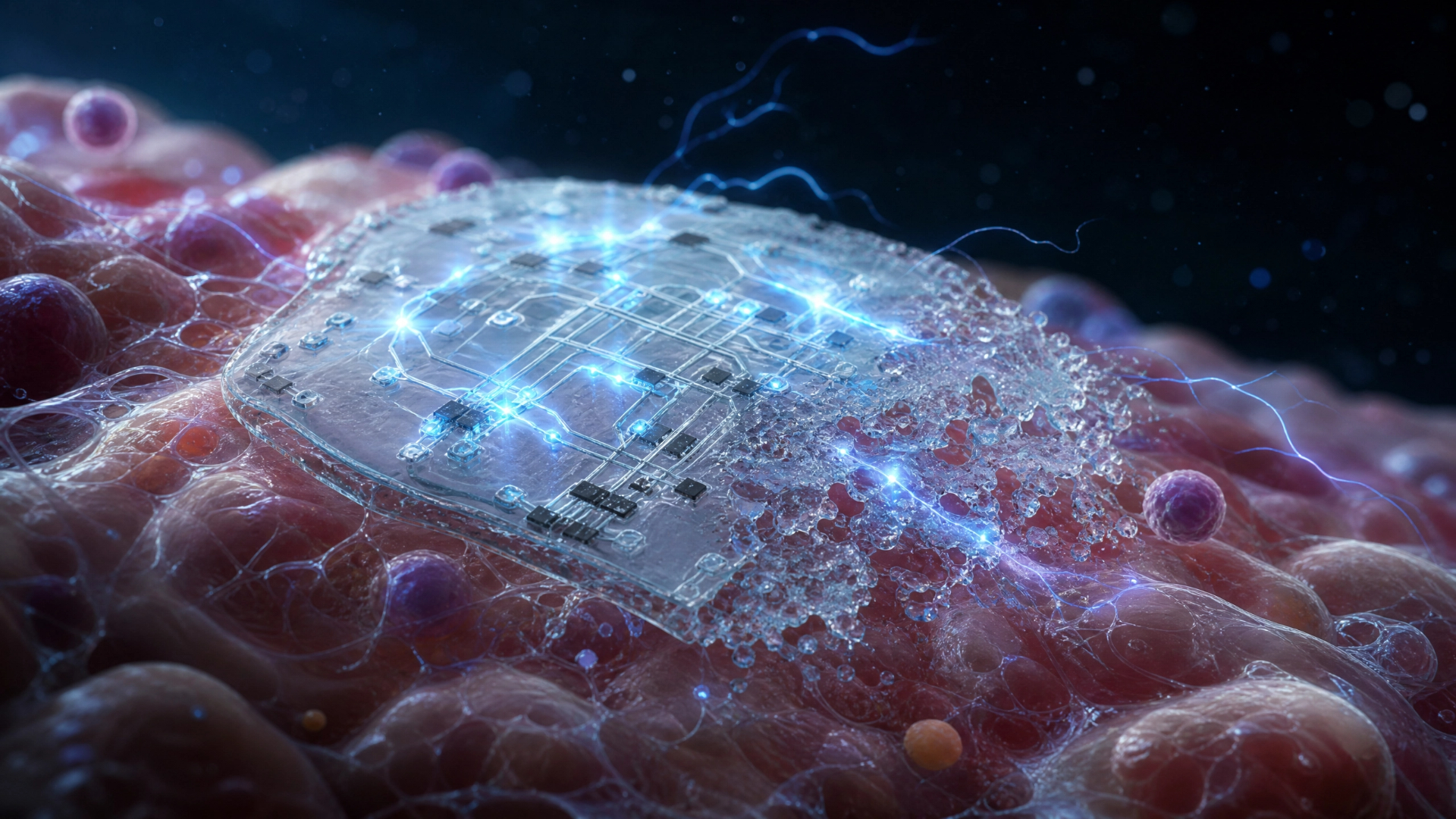
A bioresorbable electronic implant delivering targeted electrical stimulation to tissue, with the device visibly beginning to dissolve after completing its therapeutic function.
Electrical stimulation is a vital technique used to manage various conditions, including arrhythmias, heart block, gastroparesis, epilepsy, and nerve injuries. Traditionally, this required either permanent implants or temporary devices that necessitated a second surgical procedure for removal. A new development in 2026 introduces a bioresorbable organ-stimulating device that naturally vanishes after the treatment is complete. [3]
This ultrathin device incorporates a bioresorbable polymer and an RF-receiving coil, allowing it to be powered and controlled wirelessly by an external, skin-interfaced unit. Once the required therapeutic electrical stimulation has been delivered over the treatment period, the implant safely degrades and is absorbed by the body. This eliminates the risks and costs associated with a second removal surgery, representing a significant step forward in the minimally invasive management of chronic and acute conditions. [3]
Conclusion
The medical breakthroughs of 2026 illustrate the power of combining targeted molecular therapies, artificial intelligence, and advanced materials science. As these innovations move from the laboratory to clinical practice, they promise to significantly improve patient outcomes and redefine the standard of care across multiple medical disciplines. The convergence of biology, engineering, and data science is clearly accelerating the pace of discovery in ways that were unimaginable just a decade ago.
🎯 Key Takeaway
Molecular glues, AI-designed microneedles, and dissolving bioelectronics are converging to deliver smarter, less invasive, and more effective treatments — reshaping the future of medicine.
References
- Hume, S. (2026). 10 breakthroughs in biomedicine in 2026... so far. Breaking Ground (Substack). breakingground.substack.com
- Hanyang University. (2026). AI-guided microneedles bend at body temperature to speed diabetic wound healing. Medical Xpress. medicalxpress.com
- Fadelli, I. (2026). Bioresorbable implant electrically stimulates organs, nerves and muscles then vanishes after treatment. Medical Xpress. medicalxpress.com