Mind the Gap
Are You Asking More From Your Body Than It Can Handle?
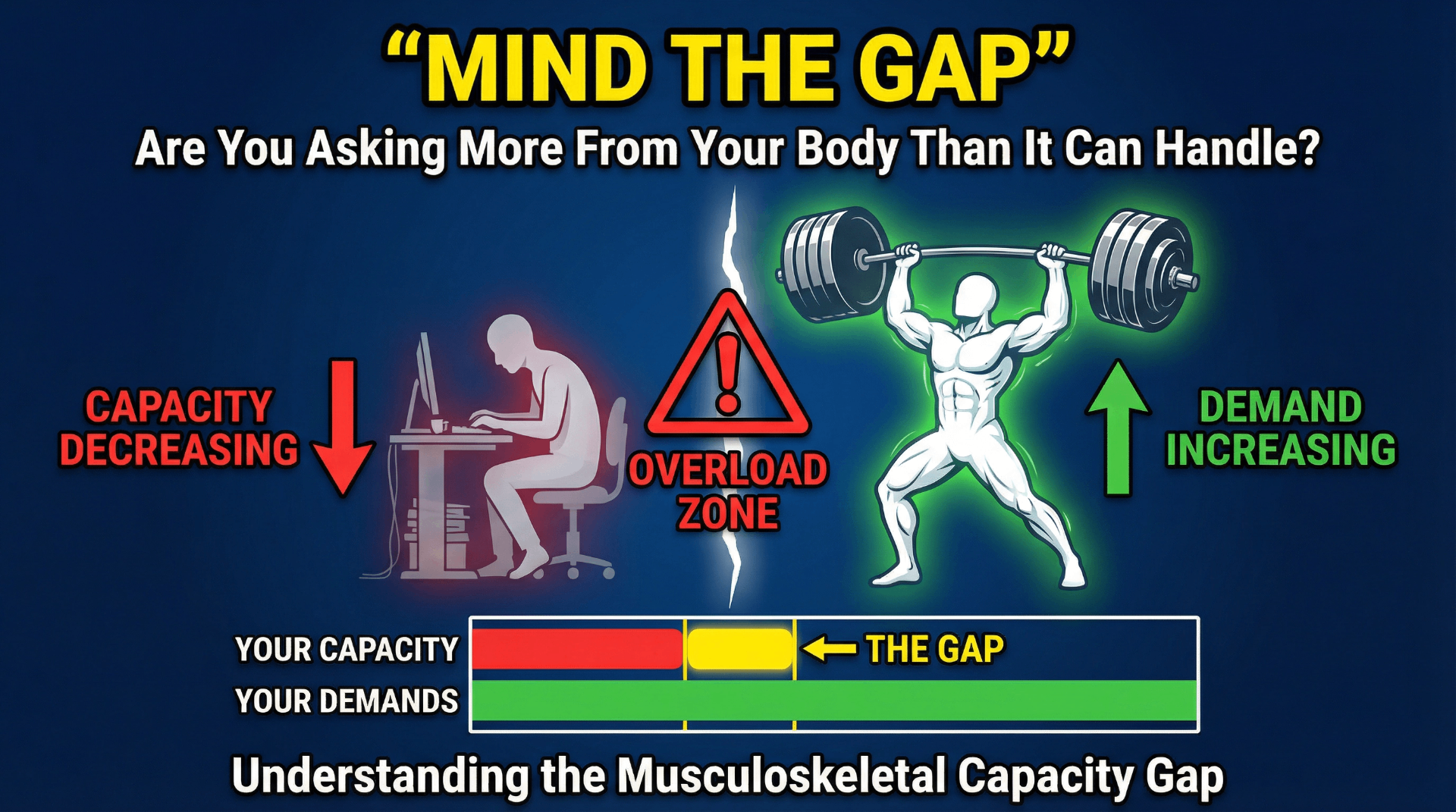
In our fast-paced, modern world, a silent epidemic is growing. It's not a new virus or a rare disease, but a fundamental mismatch between our bodies and our lifestyles. Physical therapists and kinesiologists are increasingly identifying a crucial issue at the heart of many common aches, pains, and injuries: the Musculoskeletal Capacity Gap.
This gap is the widening disparity between our body's physical capacity—its strength, endurance, and tissue tolerance—and the physical demands we place on it. A recent press release from Health HQ, a physical therapy practice in Michigan, brought this clinical observation to the forefront, highlighting a pattern that is becoming all too common [1].
The Capacity vs. Demand Equation
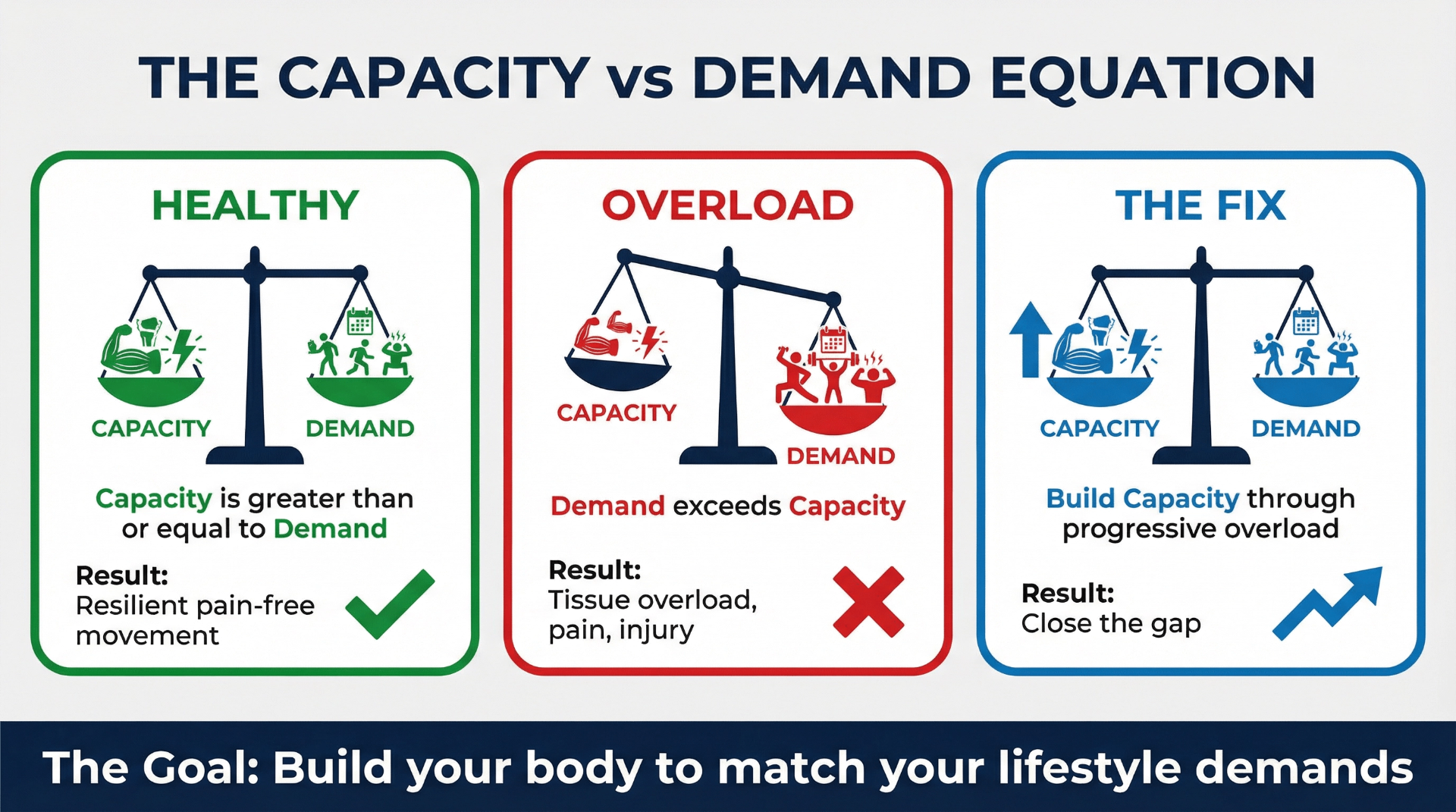
The core concept is simple: our musculoskeletal system is constantly balancing an equation between capacity and demand.
💪Capacity
What your tissues (muscles, tendons, ligaments, bones) are prepared to handle.
⚡Demand
What you ask your tissues to do.
When your capacity is greater than or equal to the demand, you move with resilience and without pain. However, when demand exceeds capacity, your tissues experience overload. This overload is the root cause of many musculoskeletal complaints, from nagging low back pain to acute sports injuries.
"Many patients present with patterns where prolonged sedentary time reduces baseline tissue tolerance, followed by demands that exceed current capacity during exercise or daily activities."
The Modern Dilemma: The Desk Jockey and the Weekend Warrior
Modern life creates the perfect storm for this capacity gap to widen. Consider two common profiles:
1The Desk Jockey
Spends 8+ hours a day sitting. Their baseline physical demands are low, and their musculoskeletal capacity diminishes over time due to inactivity. Their muscles decondition, and their tissues lose their resilience. Even a simple activity like lifting a heavy box or a sudden twisting motion can exceed their reduced capacity, leading to injury.
2The Weekend Warrior
Sits at a desk all week (low demand, decreasing capacity), then engages in high-intensity activity on the weekend, like a long run, a game of basketball, or a heavy lifting session at the gym. This sudden spike in demand on a deconditioned system is a classic recipe for tissue overload and injury.
This pattern is supported by a wealth of research. Studies have consistently shown that sedentary behavior is associated with a higher incidence of musculoskeletal pain, imbalanced muscles, and a loss of functional capacity [2, 3, 4].
Bridging the Gap: The Kinesiology Solution
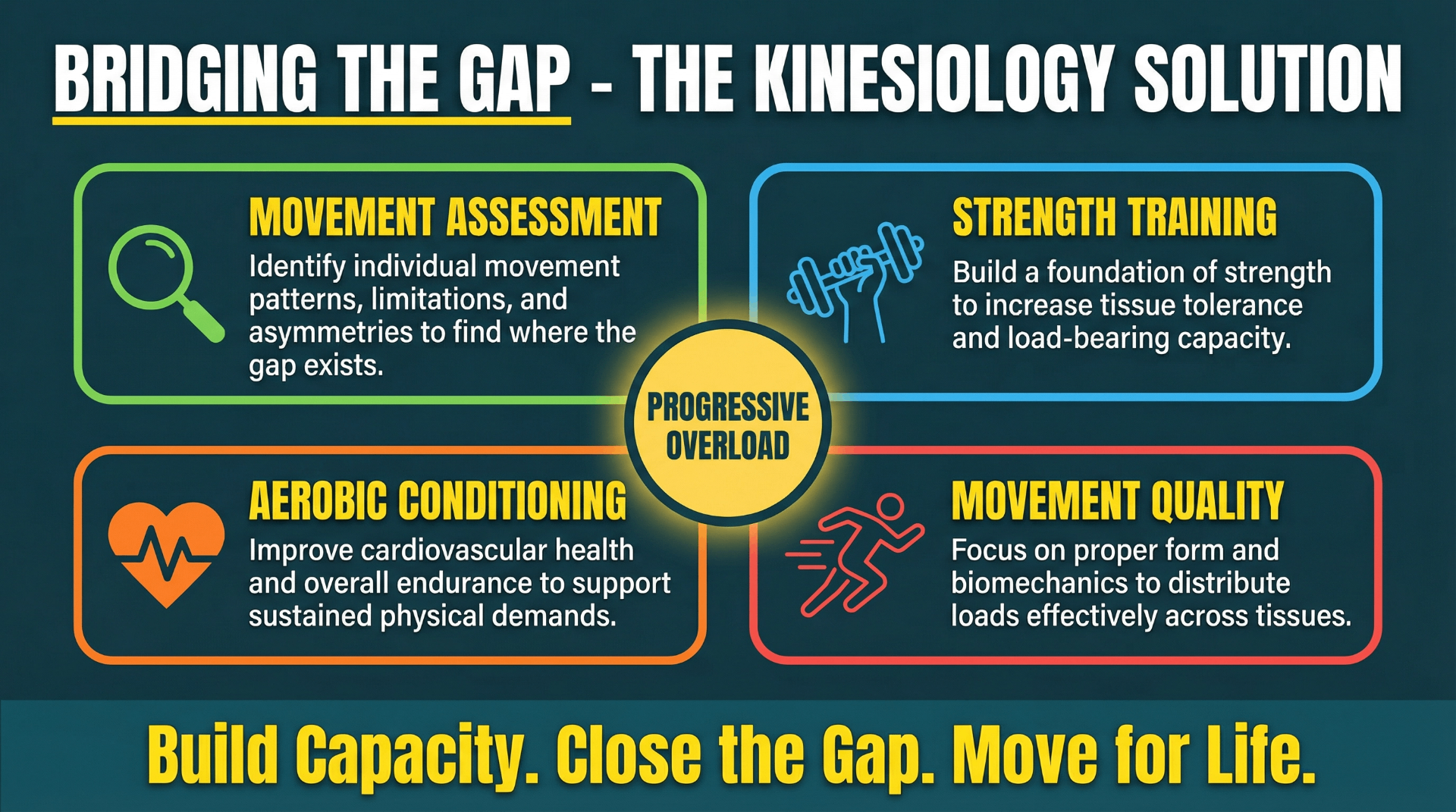
The good news is that this gap is not permanent. The principles of kinesiology and physical therapy provide a clear roadmap for closing it. The solution is not to avoid activity, but to build capacity intelligently.
This is achieved through progressive overload, the gradual and systematic increase of stress placed upon the body. By progressively exposing your tissues to varied loads, you stimulate them to adapt and become stronger and more resilient. This process aligns your body's capacity with your life's demands.
Movement Assessment
Identifying individual movement patterns, limitations, and asymmetries.
Strength Training
Building a foundation of strength to increase tissue tolerance and load-bearing capacity.
Aerobic Conditioning
Improving cardiovascular health and overall endurance.
Movement Quality
Focusing on proper form and biomechanics to distribute loads effectively.
This approach applies across all age groups, from young athletes to older adults seeking to maintain their independence. By evaluating movement and load tolerance in the context of individual demands, we can support sustained function and lifelong activity.
Take Control of Your Capacity
Understanding the musculoskeletal capacity gap empowers you to take control of your physical health. It shifts the focus from simply treating pain to proactively building a more resilient body.
If you experience recurring aches and pains, consider not just what you did to cause the pain, but whether your body was prepared for that demand in the first place. By working to close the gap, you can build a body that is ready for whatever challenges you throw at it.
🎯 Key Takeaway
Don't just treat pain — build capacity. Through progressive overload and intelligent movement training, you can close the gap between what your body can handle and what your lifestyle demands.
References
- Health HQ. (2026, February 11). Health HQ Addresses Growing Gap Between Musculoskeletal Capacity and Physical Demands in Modern Lifestyles. Naples Daily News.
- Dzakpasu, F. Q. S., et al. (2021). Sedentary behaviour and musculoskeletal pain in the low back, neck, and shoulder. BMC Musculoskeletal Disorders, 22(1), 1-15.
- Marijančić, V., et al. (2023). Relationship between Physical Activity and Sedentary Behavior with Trunk Muscle Endurance. Medicina, 59(10), 1833.
- Battista, F., et al. (2025). Sedentary lifestyle and physical inactivity: A mutual interplay in the development of sarcopenia. Basic and Applied Myology, 35(1), 1-10.