The Science Behind Muscle Hypertrophy
What Really Makes Muscles Grow
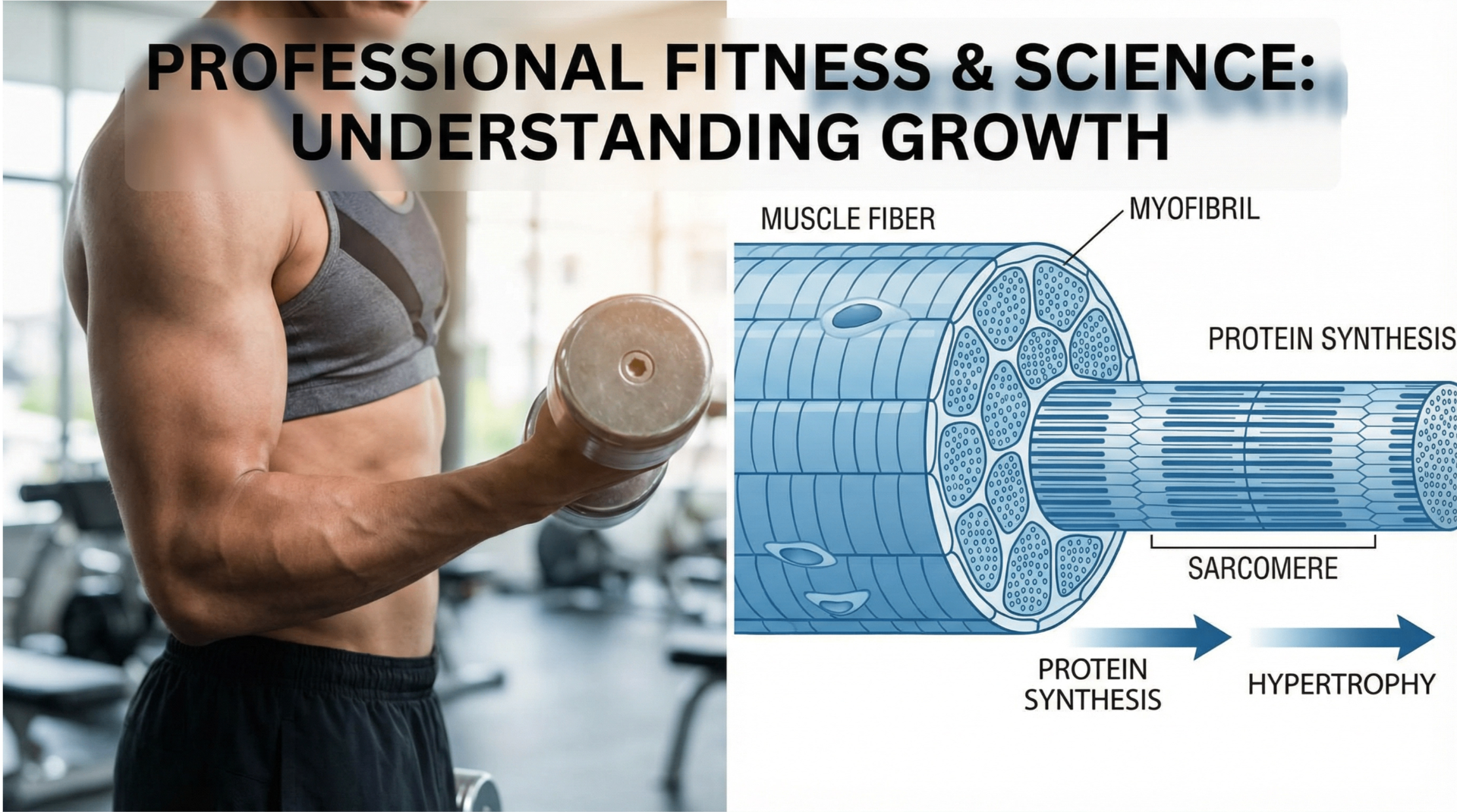
Muscle hypertrophy, or the growth of muscle tissue, is the holy grail for many gym-goers, athletes, and bodybuilders. But what is the actual science behind this process? It's not just about lifting heavy weights; it's a complex interplay of physiological signals and responses. This article breaks down the core mechanisms of muscle hypertrophy, provides evidence-based training principles, and debunks common myths to give you a clear roadmap for maximizing muscle growth.
The 3 Core Mechanisms of Muscle Hypertrophy
According to leading research by Dr. Brad Schoenfeld, muscle hypertrophy is driven by three primary mechanisms [1]. Understanding these is key to designing effective training programs.
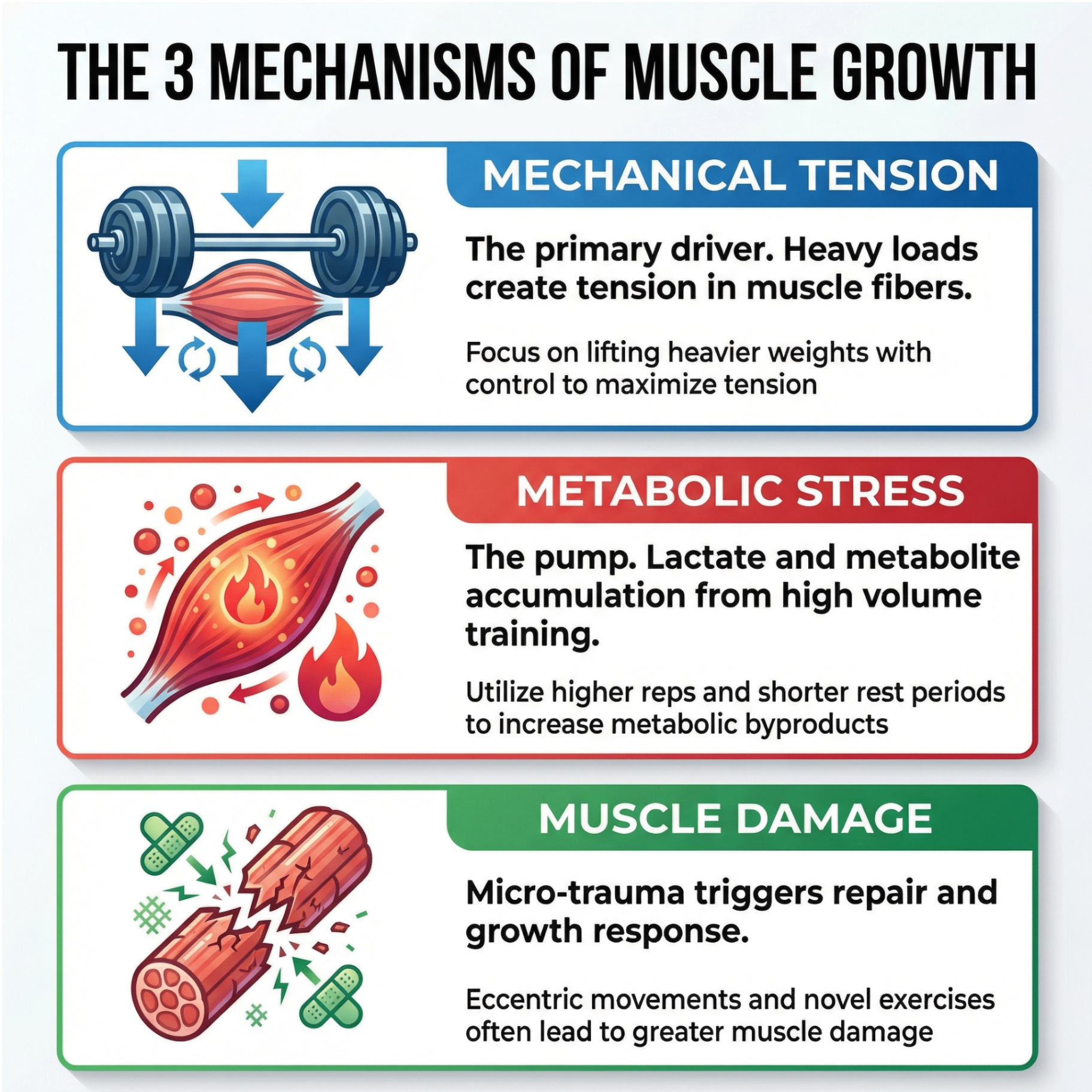
1Mechanical Tension
This is the most important factor for muscle growth. Mechanical tension is the force placed on a muscle when it is stretched and contracted under load. Lifting heavy weights creates high levels of tension, which signals the muscle fibers to adapt and grow stronger and larger.
How to apply it:
Focus on progressive overload—gradually increasing the weight you lift over time. Compound exercises like squats, deadlifts, and bench presses are excellent for creating high mechanical tension.
2Metabolic Stress
Ever felt that "pump" or burning sensation during a high-rep set? That's metabolic stress. It's the buildup of metabolites like lactate, hydrogen ions, and creatine within the muscle cells. This cellular swelling and chemical environment signals the muscle to grow.
How to apply it:
Use moderate to high repetitions (12-20 reps) with shorter rest periods (30-60 seconds). This traps blood in the muscle, leading to that pump and significant metabolic stress.
3Muscle Damage
This refers to the micro-tears that occur in muscle fibers during intense exercise, particularly during the eccentric (lowering) phase of a lift. This damage triggers an inflammatory response, leading to the release of growth factors that repair and rebuild the muscle fibers, making them bigger and more resilient.
How to apply it:
Emphasize the eccentric portion of your lifts (e.g., take 3-4 seconds to lower the weight). Introducing new exercises can also cause more muscle damage.
Evidence-Based Training Principles for Hypertrophy
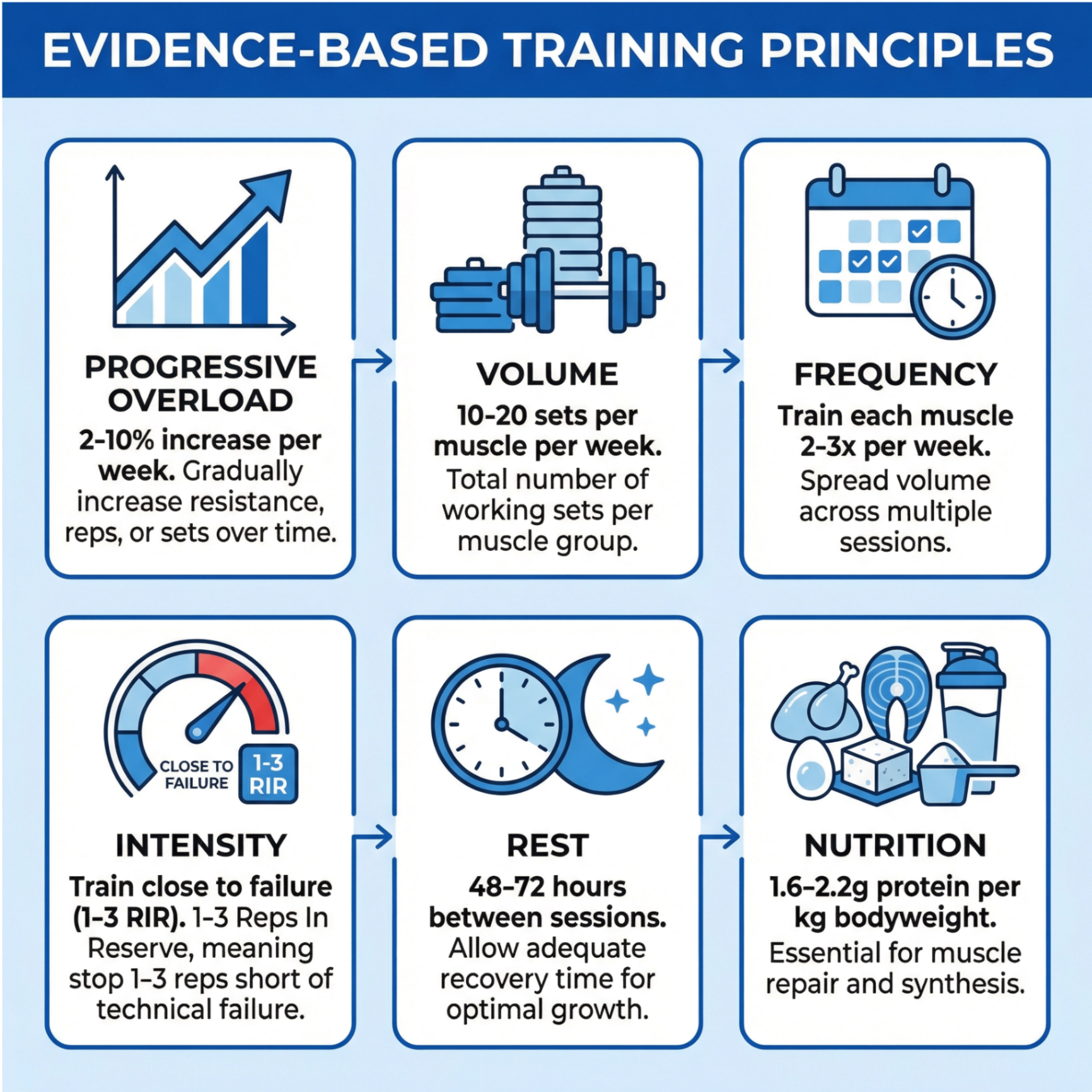
Science has given us clear guidelines on how to structure training for optimal muscle growth. Here are the key principles based on current research [2, 3].
| Principle | Recommendation | Why it Works |
|---|---|---|
| Progressive Overload | Gradually increase weight, reps, or sets over time. | The primary driver of all adaptation. Muscles must be challenged to grow. |
| Volume | 10-20 hard sets per muscle group per week. | Provides sufficient stimulus for hypertrophy. More is not always better. |
| Frequency | Train each muscle group 2-3 times per week. | Spreading volume across multiple sessions is superior to one long session. |
| Intensity | Train close to failure (1-3 Reps in Reserve). | Ensures that muscle fibers are maximally recruited and stimulated. |
| Rest | 48-72 hours between training the same muscle group. | Muscles grow during recovery, not during training. |
| Nutrition | 1.6-2.2g protein per kg of bodyweight per day. | Provides the building blocks (amino acids) for muscle repair and synthesis. |
Debunking Common Muscle Building Myths
There is a lot of misinformation in the fitness industry. Let's clear up some common myths with science.
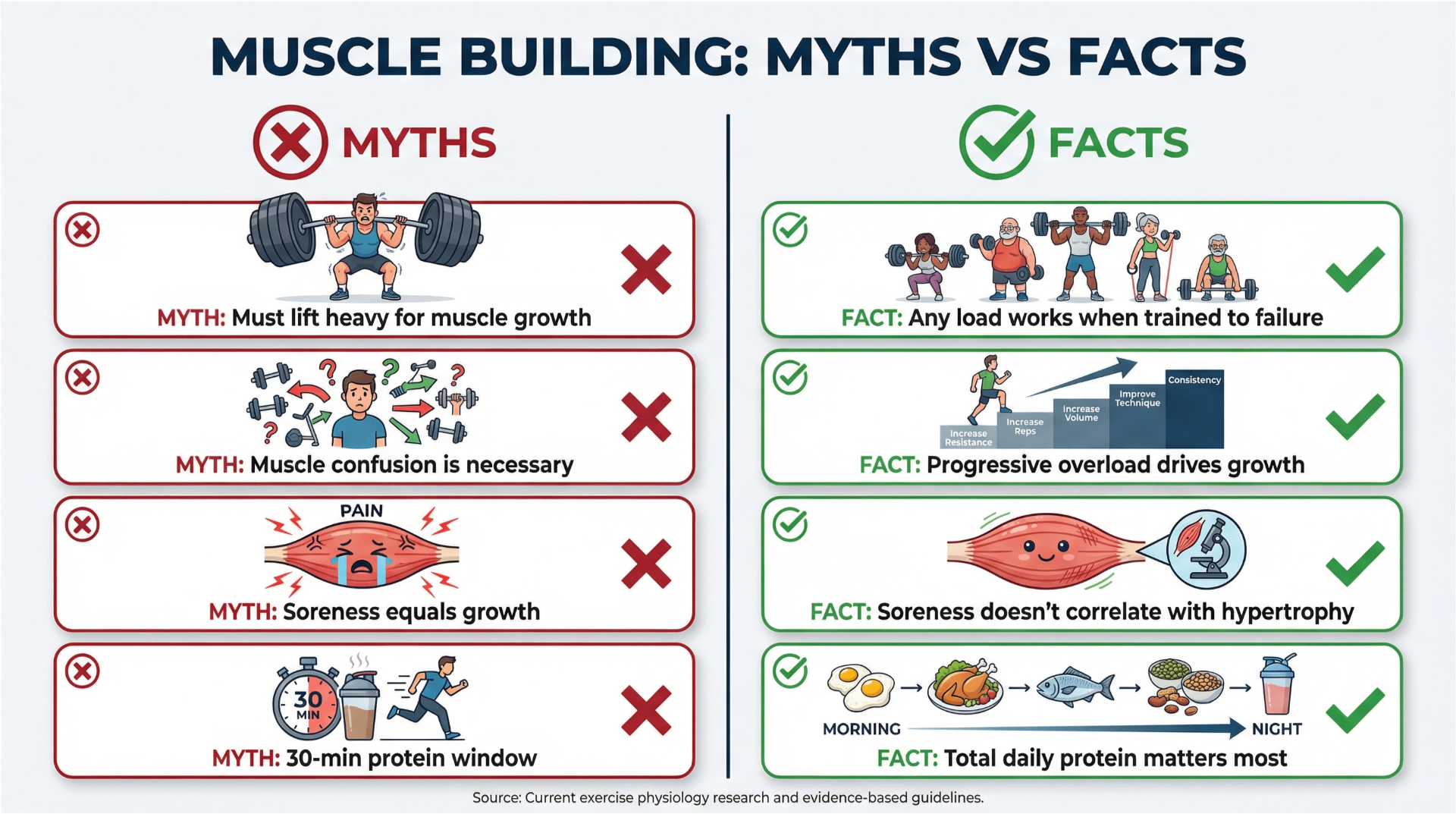
Myth: You must lift heavy to grow.
Fact: Studies show that both heavy (low-rep) and light (high-rep) loads can produce similar muscle growth, as long as sets are taken close to muscular failure [4].
Myth: "Muscle confusion" is necessary.
Fact: There is no scientific evidence that muscles need to be "confused." The key is consistent, progressive overload, not random changes to your workout [5].
Myth: You must be sore to grow.
Fact: Muscle soreness (DOMS) is a poor indicator of muscle growth. While muscle damage is one mechanism, it is not a prerequisite for hypertrophy [1].
Myth: You must eat protein within 30 minutes of your workout.
Fact: The "anabolic window" is much wider than 30 minutes. Total daily protein intake is far more important than nutrient timing [6].
Practical Application for Trainers
As a trainer, you can use this information to design smarter, more effective programs for your clients.
- 1
Prioritize Progressive Overload
This is the non-negotiable foundation of any hypertrophy program.
- 2
Incorporate Variety
Use a mix of rep ranges to target all three mechanisms. Start with heavy compound lifts (mechanical tension), then move to higher-rep accessory work (metabolic stress).
- 3
Educate Your Clients
Teach them the why behind their training. Debunk myths and empower them with evidence-based knowledge.
- 4
Focus on Recovery
Emphasize the importance of sleep, nutrition, and rest days. This is when the magic of muscle growth actually happens.
By understanding the science, you can move beyond bro-science and deliver real, sustainable results.
References
- Schoenfeld, B. J. (2010). The mechanisms of muscle hypertrophy and their application to resistance training. Journal of Strength and Conditioning Research, 24(10), 2857-2872.
- Schoenfeld, B. J., et al. (2021). Resistance Training Recommendations to Maximize Muscle Hypertrophy in an Athletic Population. Strength & Conditioning Journal, 43(4), 2-21.
- Morton, R. W., et al. (2019). Training for strength and hypertrophy: an evidence-based approach. Current Opinion in Physiology, 10, 90-95.
- Schoenfeld, B. J., et al. (2015). Effects of low-vs. high-load resistance training on muscle strength and hypertrophy in well-trained men. The Journal of Strength & Conditioning Research, 29(10), 2954-2963.
- Caliber Strong. (n.d.). The Myth Of Muscle Confusion.
- Schoenfeld, B. J., & Aragon, A. A. (2013). Is there a postworkout anabolic window of opportunity for nutrient consumption? Strength & Conditioning Journal, 35(5), 6-10.