Force and Motion
Learn how forces create movement in the human body — from Newton's Laws to torque and center of gravity.
Introduction
Human movement, from the simple act of walking to the complex acrobatics of a gymnast, is governed by a set of fundamental principles known as body mechanics. At its core, body mechanics is the application of mechanical laws to the living body, specifically to the forces that act on the musculoskeletal system and the resulting movements.
Understanding these principles is crucial for kinesiologists, physical therapists, and fitness professionals to optimize performance, prevent injury, and design effective rehabilitation programs.
Watch: What Is Torque?
The Law of Inertia
Newton's First Law states that an object will remain at rest or in uniform motion in a straight line unless acted upon by an external force. This tendency of an object to resist a change in its state of motion is called inertia.
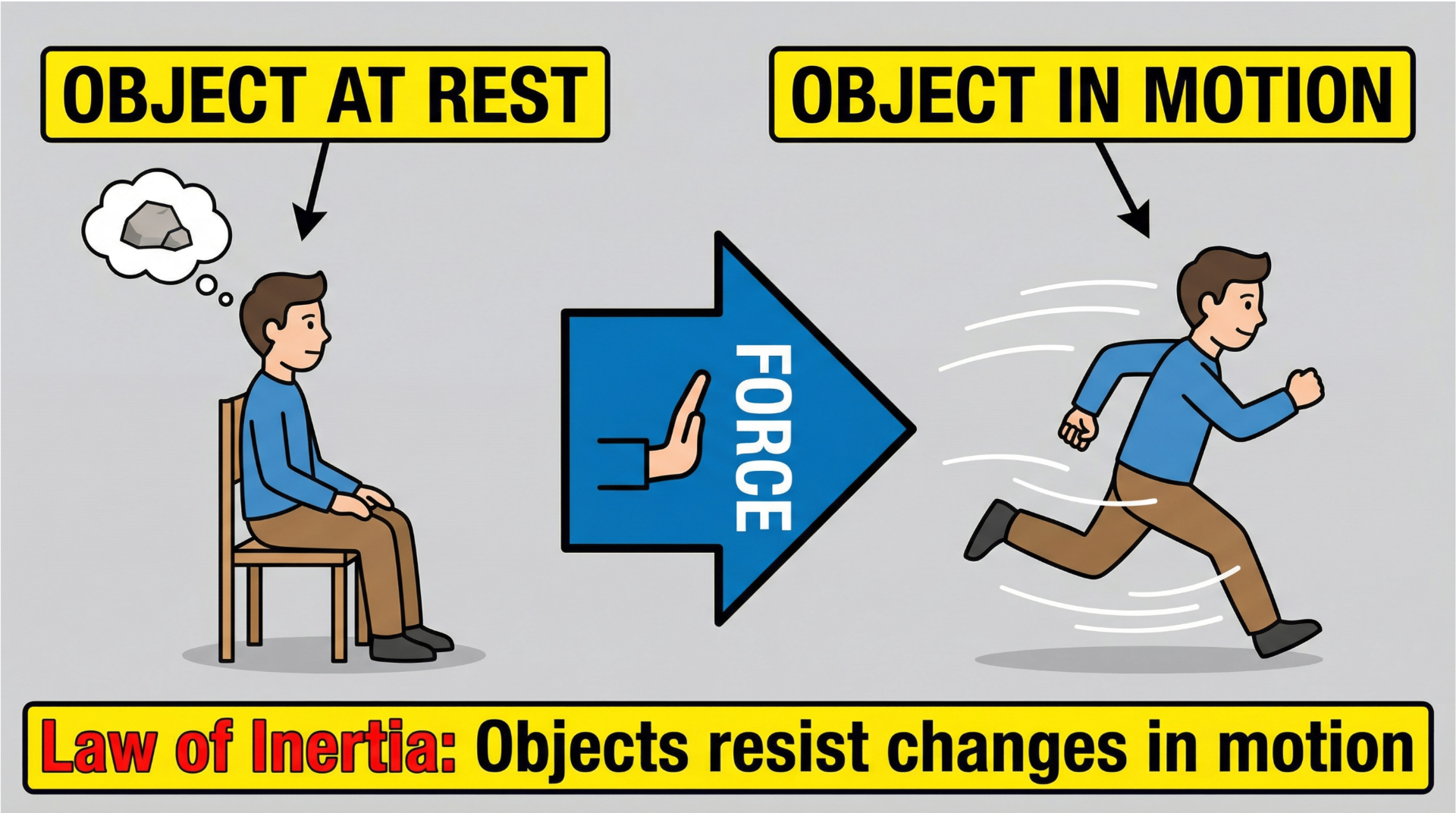
The greater an object's mass, the greater its inertia. A sprinter in the starting blocks remains at rest until the explosive force from their leg muscles propels them forward. Similarly, a moving athlete must apply a braking force to slow down or change direction.
💡 Body Example: It requires significantly more force to push a heavy blocking sled than a light one — that's inertia in action!
The Law of Acceleration
The Second Law quantifies the relationship between force, mass, and acceleration, famously expressed in the equation:
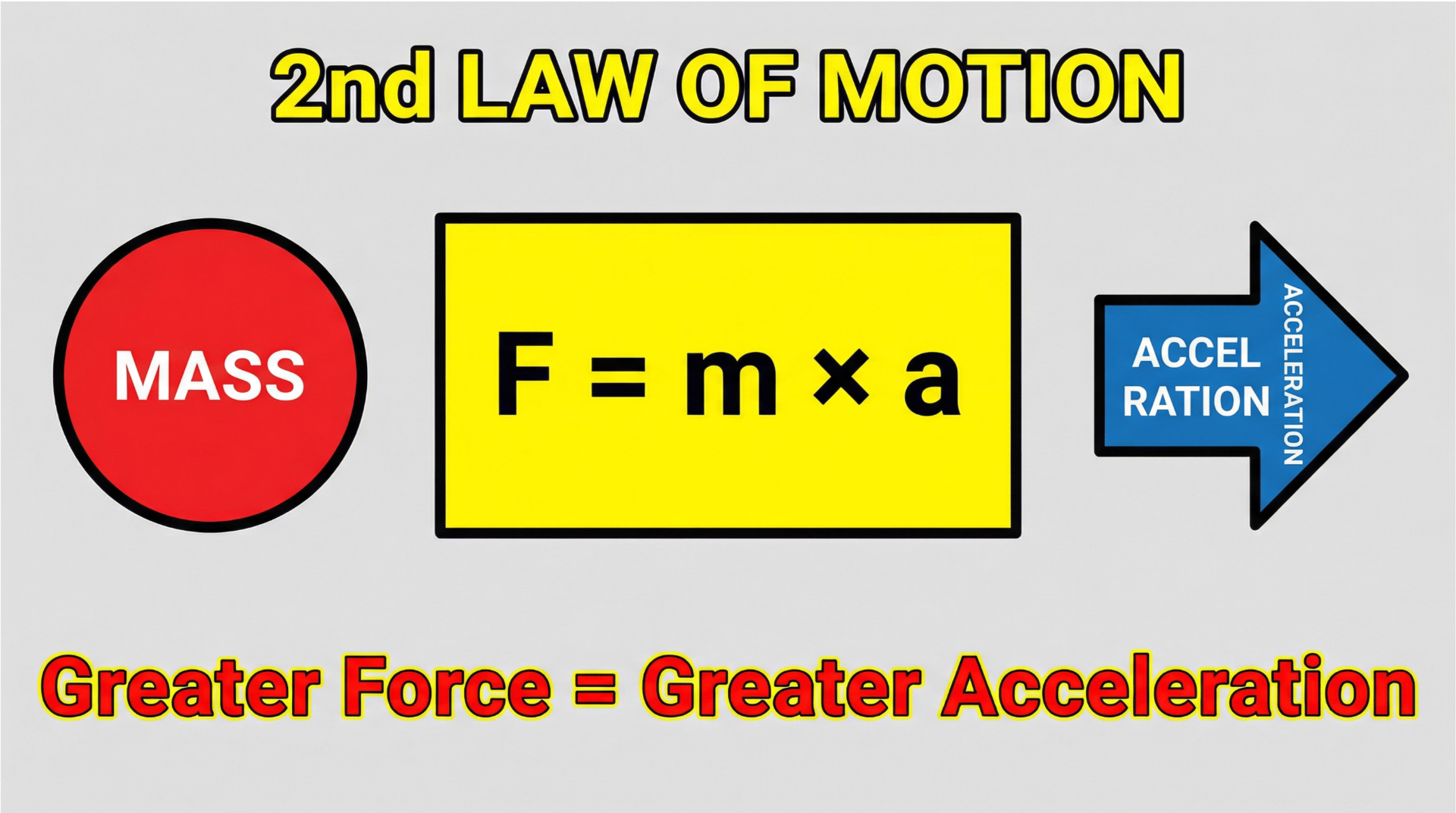
The acceleration of an object is directly proportional to the net force acting on it and inversely proportional to its mass. To jump higher or throw a ball faster, one must either increase the applied force or decrease the mass of the object being moved.
💡 This is why athletes focus on building strength (more force) and maintaining lean body mass!
The Law of Action and Reaction
Newton's Third Law posits that for every action, there is an equal and opposite reaction. When you walk, your foot pushes backward on the ground (action), and the ground pushes forward on your foot with an equal force (reaction), propelling you forward.
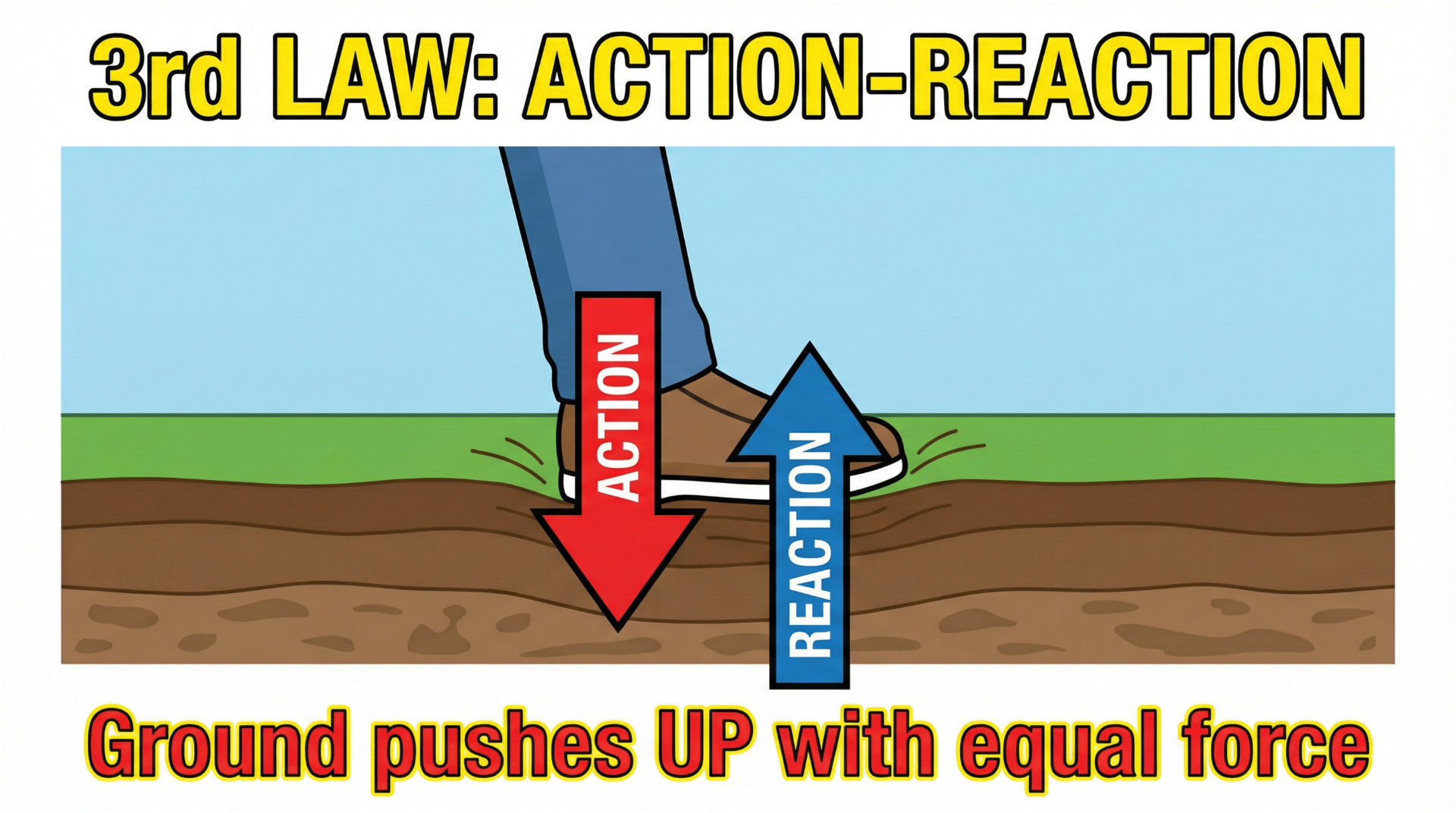
This concept of ground reaction force is fundamental to all terrestrial locomotion. The firmness of the surface affects the efficiency of this force exchange — running on sand is more difficult than running on concrete because the sand dissipates more of the force, resulting in a smaller reaction force.
The Nature of Force in Biomechanics
A force is a push or a pull that can cause an object to accelerate, change direction, or deform. In biomechanics, we analyze both external and internal forces.
| Force Type | Description | Examples |
|---|---|---|
| External Forces | Forces that originate outside the body. | Gravity, ground reaction force, wind resistance, friction |
| Internal Forces | Forces generated by structures within the body. | Muscle contractions, tension in ligaments and tendons, forces within joints |
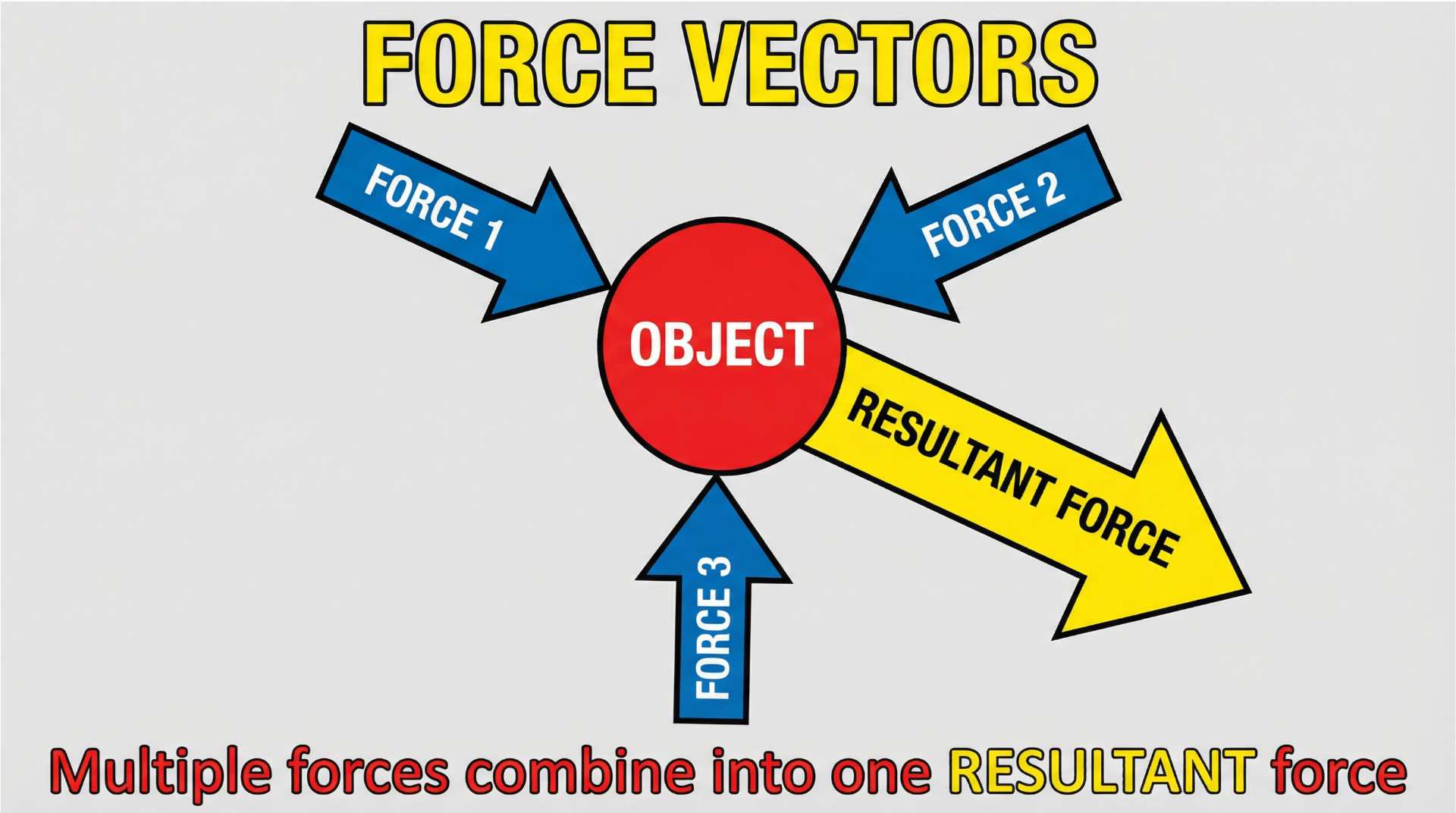
Forces are vectors, meaning they possess both magnitude (how much force) and direction. When multiple forces act on a body simultaneously, they can be combined into a single resultant force.
Torque: The Force of Rotation
While forces cause linear motion, torque (or moment of force) causes rotational motion. Torque is the product of a force and the perpendicular distance from the force's line of action to the axis of rotation.
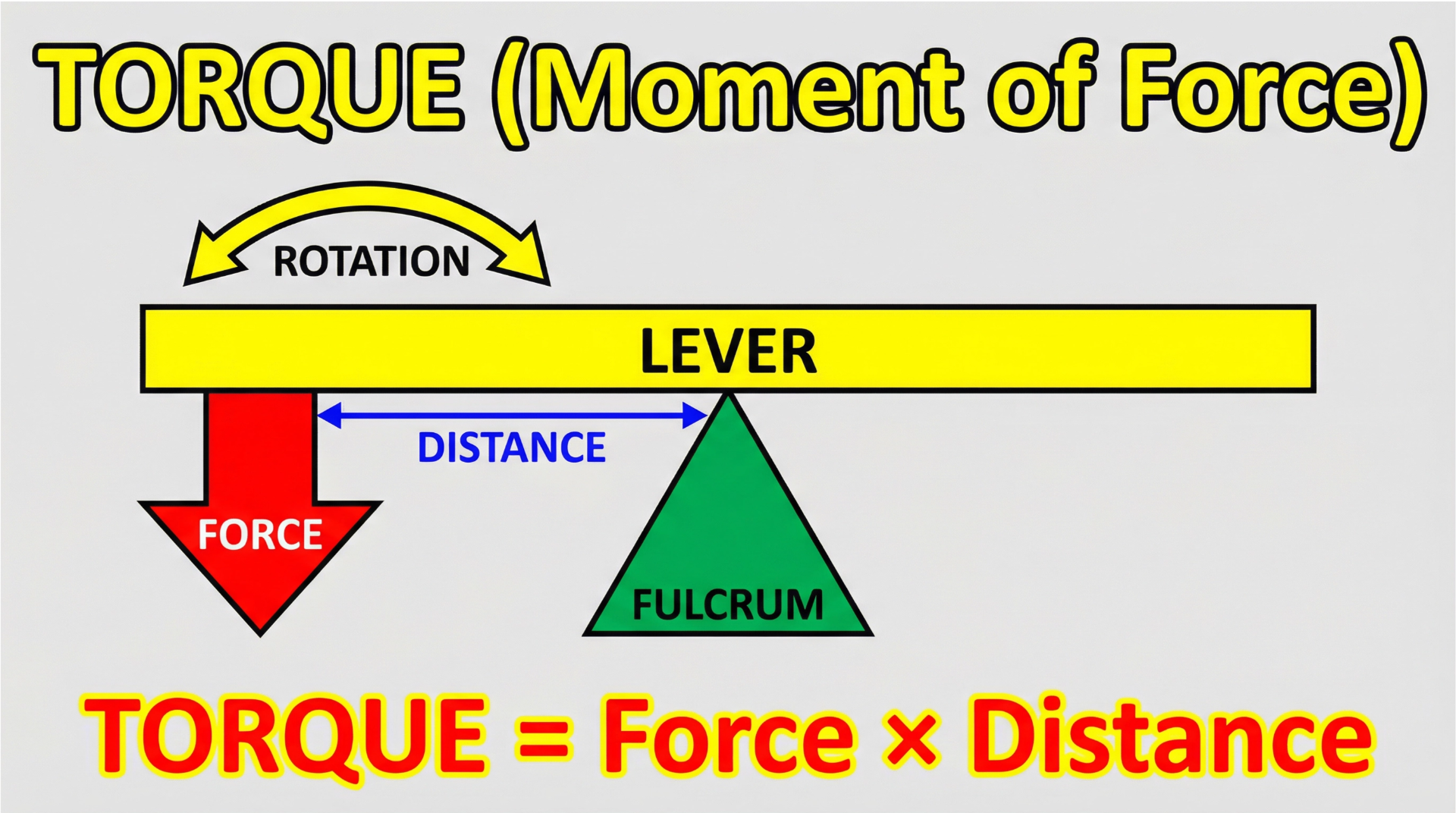
In the human body, joints act as axes of rotation, and muscles create forces that produce torque to move our limbs. For example, the biceps muscle contracts, creating a force that pulls on the forearm, generating torque at the elbow joint and causing the arm to flex.
Center of Gravity and Stability
The center of gravity (COG) is a hypothetical point around which the mass of a body is evenly distributed. In the complex human body, its location varies depending on body position.
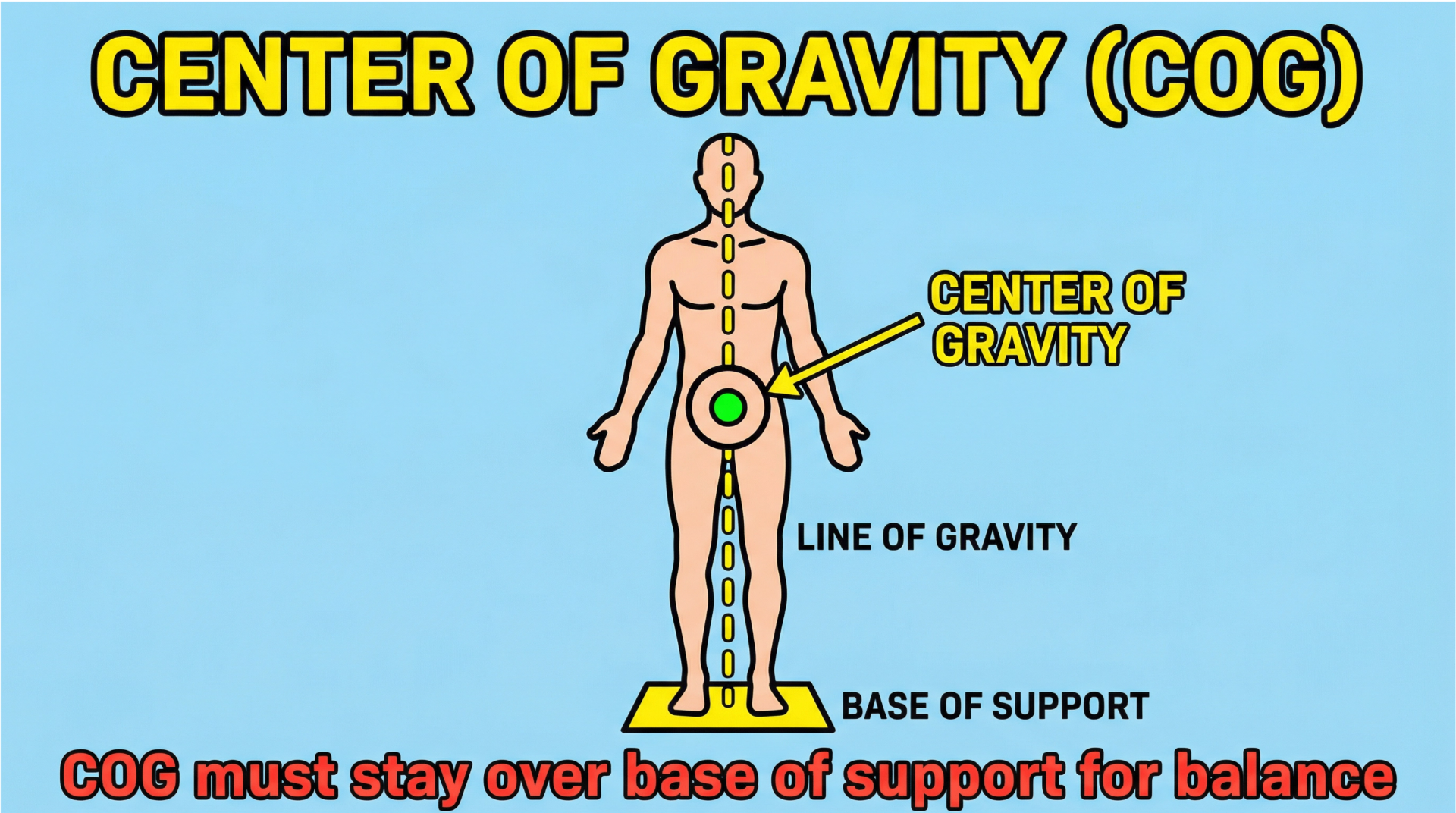
An object is most stable when its line of gravity (a vertical line running through the COG) falls within its base of support. Athletes often lower their center of gravity (e.g., a wrestler's stance) to increase their stability.
💡 A wider stance and lower body position = greater stability. That's why wrestlers and defensive linemen crouch low!
Conclusion
The principles of force and motion are not just abstract physics concepts; they are the invisible forces that shape every movement we make. By understanding Newton's laws, the nature of forces and torques, and the importance of the center of gravity, we can analyze human movement with greater precision.
This knowledge empowers us to design more effective training programs, develop safer techniques for work and sport, and create innovative solutions for rehabilitation — ultimately helping people move better, stronger, and with less risk of injury.
References
- Physiopedia. Introduction to Human Biomechanics - External Forces. physio-pedia.com
- Ebbecke, J. (2023). Newton's Laws of Motion: The Basis for Human Movement. The Biomechanist. biomechanist.net
- Physiopedia. Centre of Gravity. physio-pedia.com